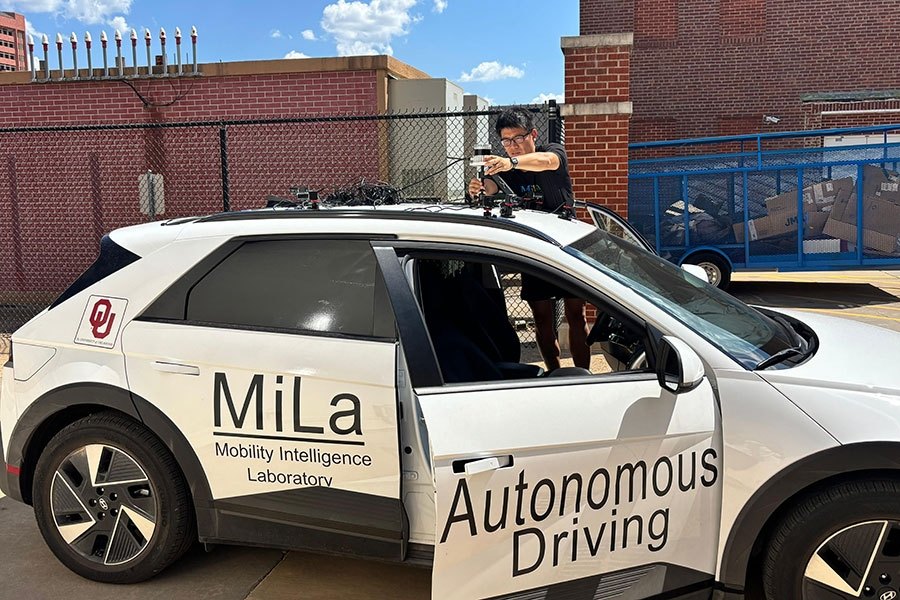
A University of Oklahoma lab in Norman is developing a self-driving car system that could retrofit any consumer vehicle for about $1,000 in hardware.
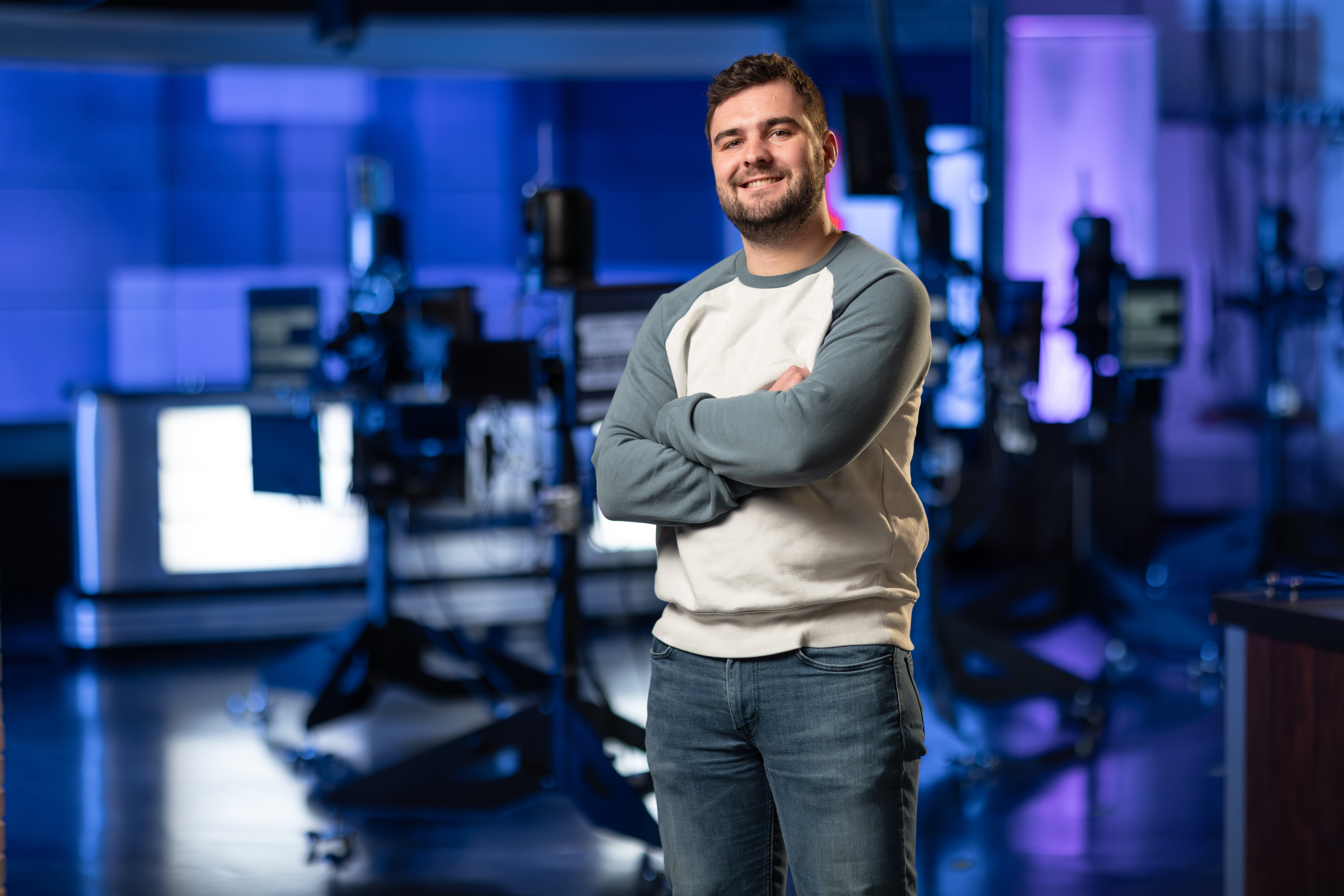
Bin Xu, a mechanical engineering professor who directs the Mobility Intelligence Lab on the Norman campus, leads a team of a dozen researchers building the prototype, according to an OU news release published Sept. 3.
By comparison, a self-driving Tesla starts at around $40,000 before monthly fees. Waymo's Jaguar-based robotaxis cost well into six figures, according to the university.
"Self-driving for all is coming, but it's slow," Xu said. "We're trying to optimize AI algorithms so they can fit into low-cost hardware and still maintain high daily driving performance without compromising safety."
The retrofit kit uses cameras, GPS units, computers and environment-sensing devices to perceive surroundings, plan routes and navigate to a destination. The lab's fleet of test vehicles includes four electric Nissan LEAFs, one electric Hyundai Ioniq 5, a gas-powered Lincoln MKZ and a gas-powered Dodge Ram cargo van.
Algorithms are built on open-source software and trained using a 3D replica of a small loop around the lab. A simulator connected to a Starlink satellite uplink monitors vehicle operation remotely. Data from each test drive uploads in the evening, and the system trains on new inputs overnight.
The lab is about five years old.
No bigger than a three-car garage, it is packed with Nvidia RTX 5090 and Jetson AGX Thor GPUs, monitors and oversized screens.
The Mobility Intelligence Lab, known as MiLa, has secured more than $16 million across three federal projects funded by the U.S. Department of Transportation and the U.S. Department of Energy. Those projects include a self-driving car for logistics on rural and tribal roads and two autonomous vehicles for the city of Atoka's public transit system. The lab also runs a cargo van carrying methane leak detection equipment for oil and gas operations and a work zone safety project using connected cones and phones.
The Atoka transit work connects to OU's broader Autonomous Cargo Carriers for Enhanced Logistics in Rural and Tribal Areas project, known as ACCEL-RT. That initiative, led by OU assistant professor Dong Zhang, received a separate $10 million U.S. Department of Transportation award announced May 8, with $10 million in matching funds from partner institutions.
Xu also teaches a graduate-level course each fall, Dynamics and Control for Autonomous Driving, that puts students behind the wheel of the lab's fleet for real-world data acquisition, coding and vehicle testing.
The lab has no announced timeline for commercializing the $1,000 retrofit system or scheduling a public demonstration.