The University of Oklahoma's Health Campus is deploying artificial intelligence to triage medical images, assist with clinical documentation and eventually predict which patients face the highest risk of hospital readmission.
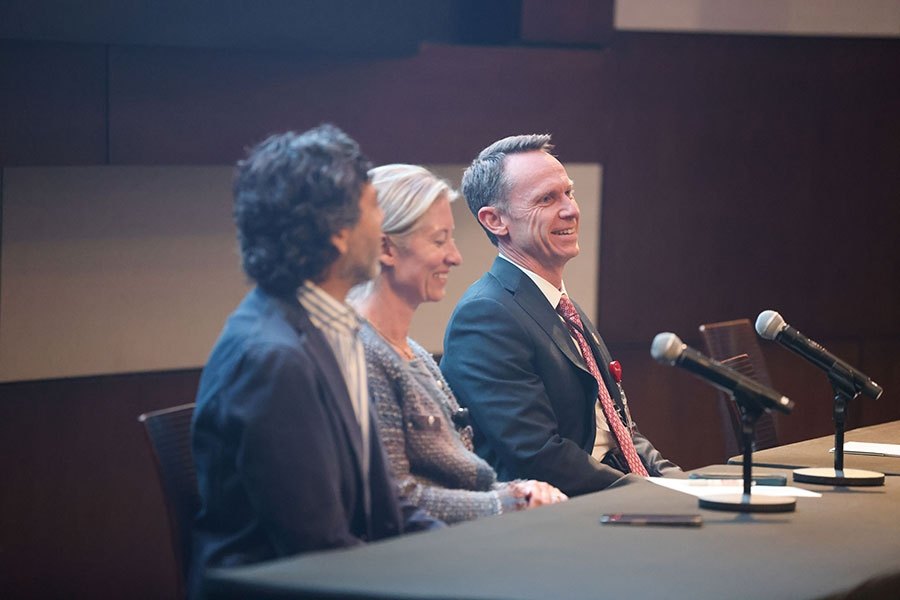
Those tools and a phased rollout plan were the focus of the first AI Symposium on the OU Health Campus, held in Oklahoma City, according to a university announcement dated Sept. 14.
The event comes 11 days after OU President Joseph Harroz Jr. called the university's AI strategy "the fail of the last two years." Harroz made the remark during his Sept. 3 State of the University address, as the OU Daily reported.
Ahmed Arshad, medical director of Clinical AI at OU Health and assistant professor of pediatrics at the OU College of Medicine, said AI is already in use at OU Health for image triage and documentation. He said the technology holds potential for predicting patient risk. It could also reduce the after-hours workload that contributes to clinician burnout, he said.
Arshad said OU Health should start with lower-risk applications while building the data infrastructure and governance to support broader use, according to the university's announcement.
Carlos Bustamante, vice dean of research at the OU College of Medicine, framed Oklahoma's poor health rankings as an opening for AI-driven improvement.
"We are ranked 49th in many health outcomes, with high rates of diabetes, cancer, cardiovascular and behavioral health conditions," Bustamante said at the symposium. "We have an unbelievable opportunity to tap into populations that are understudied."
Bustamante said OU's goal is to move key health indicators within five years. He called AI a central part of the university's strategic plan.
Ian Dunn, executive dean of the OU College of Medicine and chief physician executive at OU Health, said the health system must embrace AI while acknowledging its risks. He said the technology could reshape how physicians talk with patients, giving doctors faster access to second opinions and freeing time for deeper conversations.
Dunn also said medical education must evolve to build AI literacy into physician training as the tools become part of daily clinical practice.
Carolyn Kloek, chief medical officer of OU Health and clinical professor of ophthalmology at the OU College of Medicine, said some patients already arrive at appointments carrying AI-generated health information. That shift, she said, is changing the physician's role from sole information source to guide, helping patients evaluate what they find.
Oklahoma ranks 49th nationally in overall health outcomes, according to a separate OU announcement in August. OU trains roughly 80% of the state's healthcare workers and has doubled its nursing graduate output since OU Health's founding in June 2021. Annual revenue at OU Health has grown from $1.4 billion to $3.6 billion over that span.
OU hired its first chief artificial intelligence officer, Shishir Shah, in fall 2025, according to the OU Daily.