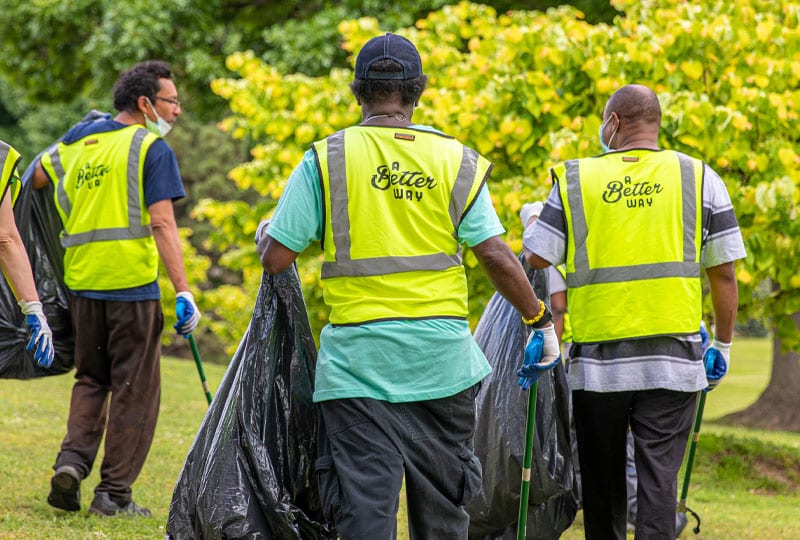
Norman's A Better Way program will shut down at the end of August after the Oklahoma Attorney General's Office denied the city's request for continued funding. The program paid people experiencing homelessness to clean public spaces and connected them with services.
The program served 232 participants during its year-long run, according to OU Daily and Oklahoma Watch. Mental Health Association of Oklahoma operated it in partnership with the city, connecting 54 participants with mental health or substance abuse services, helping 25 find employment, assisting 17 with housing and obtaining vital documents for 28 others.
The closure comes as Norman's homeless population faces encampment sweeps, a temporary shelter shutdown and a permanent shelter still years from construction.
Funding denied
A Better Way launched in June 2025 on a one-year contract worth $383,633. Of that, $333,633 came from opioid settlement funds the city received through the Attorney General's Office. The city sought new funding from that office to continue the program but was denied.
Carrie Blumert, CEO of Mental Health Association of Oklahoma, told KGOU the organization cannot apply for opioid settlement funds directly. Those dollars can only go to cities, counties or school districts.
"We are open to restarting the program if we can find additional funding or if the City of Norman wants to allocate money from their general fund," Blumert said in the Aug. 24 KGOU report.
The Attorney General's Office could not be reached for comment on why the grant was denied, OU Daily reported. Norman officials declined interview requests for the story. Tiffany Vrska, the city's chief communications officer, said in an email that the program's conclusion does not reflect a reduction in Norman's commitment to addressing homelessness.
'It literally saved my life'
Shelli Markcum came to Norman after struggling with addiction and near-suicidal homelessness. She spotted the A Better Way bus picking people up from the shelter.
"I saw the bus drive by, and I said, 'What's that?'" Markcum told OU Daily.
She signed up and said she asked the driver every day to get on the bus. The daily work kept her from relapsing, she said. Markcum is now living in a sober living home, working part-time and seeking full-time employment.
"Finding that place, it literally saved my life," Markcum said.
Crisis timeline
The program's end adds to a string of setbacks for Norman's homeless population in 2026:
- May: Gov. Kevin Stitt's Operation SAFE displaced 30 to 50 people from state-owned land next to Food and Shelter Inc. The state offered Oklahoma City up to $800,000 for housing services after similar sweeps there but did not extend that offer to Norman.
- June: A complaint led the State Fire Marshal's Office to shut down the Norman Night Shelter for four days.
- Aug. 15: State troopers returned under Operation SAFE to clear an encampment again. Workers used bulldozers to toss tents into dumpsters while about a dozen troopers stood in the field. Volunteers estimated 40 to 60 people were displaced. When some returned, 17 were arrested.
State Sen. Lisa Standridge, R-Norman, said in a press release that she requested both the May and August sweeps and asked the governor to continue clearing encampments.
What's next
Norman voters approved an $8 million bond on April 7 to build the city's first permanent homeless shelter, passing it with 54.25 percent of the vote, according to NonDoc. But construction is on hold while the Oklahoma Supreme Court considers an appeal challenging the bond. The shelter would take at least two years to complete.
City Care, which operates a shelter on Gray Street under contract with the city, turns away 30 to 50 people a month because it cannot exceed its 52-person capacity.
The City Council postponed a vote on a proposed ordinance prohibiting camping on public property at its July 28 meeting. Ward 8 Councilmember Scott Dixon moved to reconsider the ordinance Oct. 27, before House Bill 3985, the Oklahoma Safe Neighborhoods Act, takes effect Nov. 1.