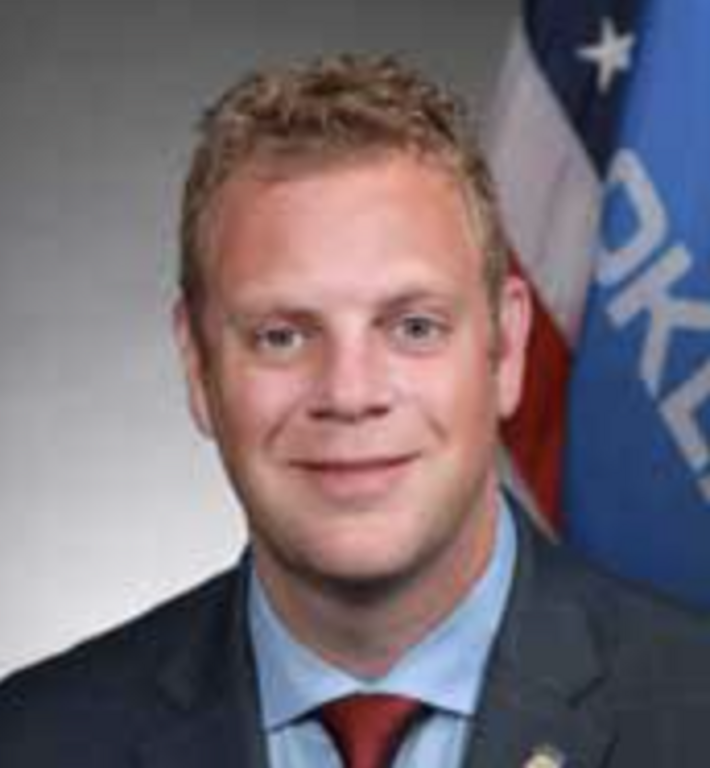
Brad Boles, a Republican state representative from Marlow, is running for the Oklahoma Corporation Commission in the Nov. 3, 2026 general election.
He faces Rhonda Eastman, who won the Democratic nomination.
Boles, who has represented House District 51 covering Grady and Stephens counties since 2018, said the commission touches about two-thirds of Oklahoma's economy. He said the state faces an "energy crossroads" with electrical demand projected to double over the next 10 to 15 years, and he wants to bring "proven energy sector leadership experience and a track record of protecting ratepayers" to the office, according to his candidate questionnaire.
Boles and Justin Hornback sought the Republican nomination for the seat, according to NonDoc.
Candidate information
- Party: Republican
- Hometown: Marlow, Oklahoma
- Education: MBA in Finance and Management, Dallas Baptist University (2009); Bachelor's in Business Administration and Management, Dallas Baptist University (2006); Associate's in Business Administration and Management, Eastern Oklahoma State College (2004)
- Family: Married to Michelle since 2006. Two children, Kristin and Matthew. First member of his family to hold elected office.
Experience and public service
Boles chairs the House Energy and Natural Resources Oversight Committee in the Oklahoma Legislature. He previously served as mayor of Marlow for four years.
His civic roles include president of the Marlow Chamber of Commerce, Marlow school board member, board director at the State Chamber of Oklahoma, chair of the Oklahoma Manufacturing Alliance and ordained deacon and treasurer at First Baptist Church of Marlow, according to his Oklahoma House of Representatives page.
In the private sector, Boles served as president of Wilco Machine and Fab, his family's metal fabrication business in Marlow. Under his leadership, the company grew from 100 employees to nearly 500 and was recognized by Inc. Magazine as one of the fastest-growing privately owned manufacturing companies in America. The company was sold to a Fortune 500 company in 2018. He later co-founded Philtek Services, which employs more than 100 people across eight states.
On the issues
Utility rates and data centers: Boles said he authored House Bill 2992, the Data Center Consumer Ratepayer Protection Act, which was signed into law in 2026. The bill requires large energy users such as data centers, cryptocurrency mining operations and AI facilities consuming 75 megawatts or more of power to pay all their own costs, including power generation, transmission and grid connections. It prohibits utility companies from shifting those costs to Oklahoma ratepayers. Boles called it "the most aggressive ratepayer protection bill passed into law of any state in 2026" in his questionnaire response.
Grid reliability and Winter Storm Uri: Boles said Oklahoma's power grid is more reliable now than during the 2021 crisis. He pointed to changes by the Southwest Power Pool (SPP), the 15-member regional grid organization, which raised storage reserve requirements from roughly 12% in 2021 to 32% starting in January 2026. Boles said those changes, had they been in place in 2021, would have prevented the crisis.
Abandoned wells and water contamination: Asked about abandoned wells and wastewater injection, Boles said the Legislature sets the statutes the commission must follow. He said he would enforce current laws and work with lawmakers on improvements if needed. "Oklahoma has proven that we can be an oil-producing state and at the same time have both clean air and water," Boles said in his questionnaire response.
Energy policy: In 2025, Boles authored the Behind the Meter legislation, which authorized large-load industrial companies to build their own electricity generation facilities on their property. He said the law has generated billions in new energy investments across Oklahoma.
The general election is Nov. 3, 2026.